What Is Jet Lag?
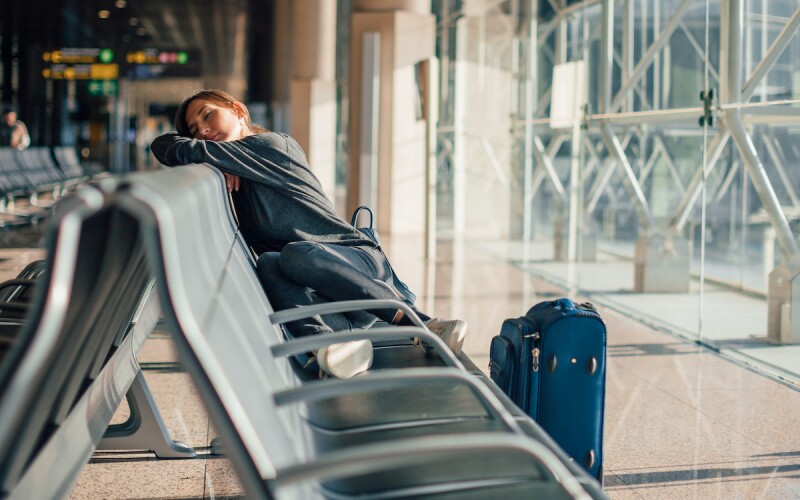
Why It Happens and How to Recover Faster
Jet lag is a common consequence of modern travel, particularly when crossing multiple time zones over a short period. While often dismissed as an inconvenience, it reflects a temporary misalignment between your internal biological clock and the external environment.
For many individuals — particularly those who travel frequently for work or performance — jet lag can affect sleep, energy, cognition, mood, and overall physiological function. Understanding the underlying biology allows for more effective and strategic management.
Grace London Clinical Perspective
Jet lag occurs when the body’s internal circadian rhythm is out of sync with the local time at your destination. While the external clock can change instantly when you land, the internal clock adjusts much more slowly — typically by around 1–2 hours per day.
At Grace London, we approach jet lag as a form of circadian disruption, influenced by light exposure, behaviour, metabolism, and environmental cues. With the right strategies, it is possible to significantly reduce both the severity and duration of symptoms.
What Is the Circadian Rhythm?
The circadian rhythm is the body’s internal 24-hour timing system. It regulates:
- Sleep–wake cycles
- Hormone release (including melatonin and cortisol)
- Body temperature
- Appetite and metabolism
- Cognitive alertness
This internal clock is maintained and synchronised by external cues known as zeitgebers (German for “time-givers”).
The most important zeitgebers include:
- Light exposure (particularly natural daylight)
- Meal timing
- Physical activity
- Social interaction
When these signals align, sleep and energy feel natural. When they are disrupted — as in jet lag — the body becomes desynchronised.
Why Jet Lag Happens
When you travel across time zones, your environment changes immediately, but your circadian system does not.
For example:
- You may feel sleepy in the middle of the day
- Wide awake at night
- Hungry at unusual times
This occurs because your internal clock is still operating on your original time zone.
The greater the number of time zones crossed, the more pronounced the misalignment — and the longer it takes to adjust.
East vs West Travel
The direction of travel has a significant impact.
Travelling East
(e.g. London → Asia)
- Requires the body clock to advance (sleep earlier)
- Typically more difficult
- Associated with more pronounced insomnia
Travelling West
(e.g. London → North America)
- Requires the body clock to delay (sleep later)
- Generally easier to adapt
- Better tolerated by most individuals
This reflects the natural tendency of the human circadian system to run slightly longer than 24 hours.
How Jet Lag Affects the Body
Jet lag affects multiple physiological systems.
Sleep
- Difficulty falling asleep at the destination
- Early waking or fragmented sleep
- “First night effect” — lighter, more disrupted sleep in unfamiliar environments
Gastrointestinal System
- Appetite disruption
- Bloating or altered digestion
- Changes in bowel habits
The gut has its own circadian rhythms, which become misaligned with feeding times.
Mood and Cognitive Function
- Reduced concentration
- Irritability
- Low mood
- Reduced performance
Immune Function
Travel itself increases exposure to new environments and pathogens. Circadian disruption may also affect immune regulation, contributing to increased susceptibility to illness.
Skin and Sun Exposure
Melanocytes (pigment-producing skin cells) also operate on a circadian rhythm. Jet lag can impair the skin’s response to UV exposure, potentially increasing susceptibility to sunburn, particularly in the first few days after arrival.
The First Night Effect
Many travellers experience particularly poor sleep on the first night in a new environment. This is a well-recognised phenomenon in sleep science.
It is thought that part of the brain remains more alert in unfamiliar surroundings — a protective mechanism sometimes referred to as a “night watch” response.
This can lead to:
- Lighter sleep
- More awakenings
- Reduced sleep depth
How to Manage Jet Lag
While jet lag cannot be eliminated entirely, it can be significantly reduced with targeted strategies.
Before Travel: Gradual Adjustment
Where possible, begin shifting your schedule a few days before departure:
- Move sleep and wake times closer to your destination time zone
- Adjust meal timing accordingly
Even small adjustments can reduce the magnitude of circadian disruption.
Light Exposure
Light is the most powerful circadian signal.
- Seek morning light when you need to advance your body clock (eastward travel)
- Seek evening light when delaying your clock (westward travel)
- Avoid bright light at inappropriate times
Targeted use of circadian light devices or glasses can help deliver the correct wavelengths at the right time.
Conversely, blue-light blocking glasses can help create “physiological darkness” in the evening when needed.
Melatonin
Short-acting melatonin can be useful when taken at the appropriate time in the destination time zone.
It works by:
- Signalling the brain that it is night
- Supporting circadian realignment
Timing is critical, and incorrect use can delay adaptation.
Caffeine
Caffeine can be used strategically to improve alertness:
- Use during the destination daytime
- Avoid in the hours before intended sleep
Meal Timing and Fasting
Meal timing is an important circadian cue.
Some individuals benefit from:
- A short fast during travel
- Breaking the fast at the destination’s meal time
This may help accelerate circadian adjustment.
Hydration and Circulation
Maintaining hydration is important during travel.
- Reduces fatigue
- Supports circulation
- May help lower risk of deep vein thrombosis (DVT) on long-haul flights
Exercise
Gentle movement can support circadian alignment.
However, it is advisable to:
- Avoid intense or strenuous exercise in the first few days
- Reduce overall physiological stress while adapting
Creating Familiarity (First Night Strategies)
To reduce the first night effect:
- Stay in familiar hotel environments where possible
- Travel with your own pillow or bedding elements
- Use familiar scents — for example, lavender, which can support relaxation and signal continuity with your home sleep environment
These cues can help the brain associate the new environment with safety and rest.
Final Thoughts
Jet lag reflects a temporary mismatch between your internal biology and the external world. While it is a natural consequence of long-distance travel, its impact can be significant — particularly for those travelling frequently or performing at a high level.
By understanding circadian physiology and applying targeted strategies, it is possible to reduce symptoms, accelerate adaptation, and maintain both wellbeing and performance.
For many individuals, optimising sleep during travel is not simply about comfort — it is about protecting energy, cognition, immune function, and overall resilience.